
The New Value of Toronto Real Estate: Why Multi-Residential Properties Are Capturing Investor Attention
/New zoning permissions, municipal incentives & changing land economics are creating a compelling opportunity for investors who understand the value of income-producing property.
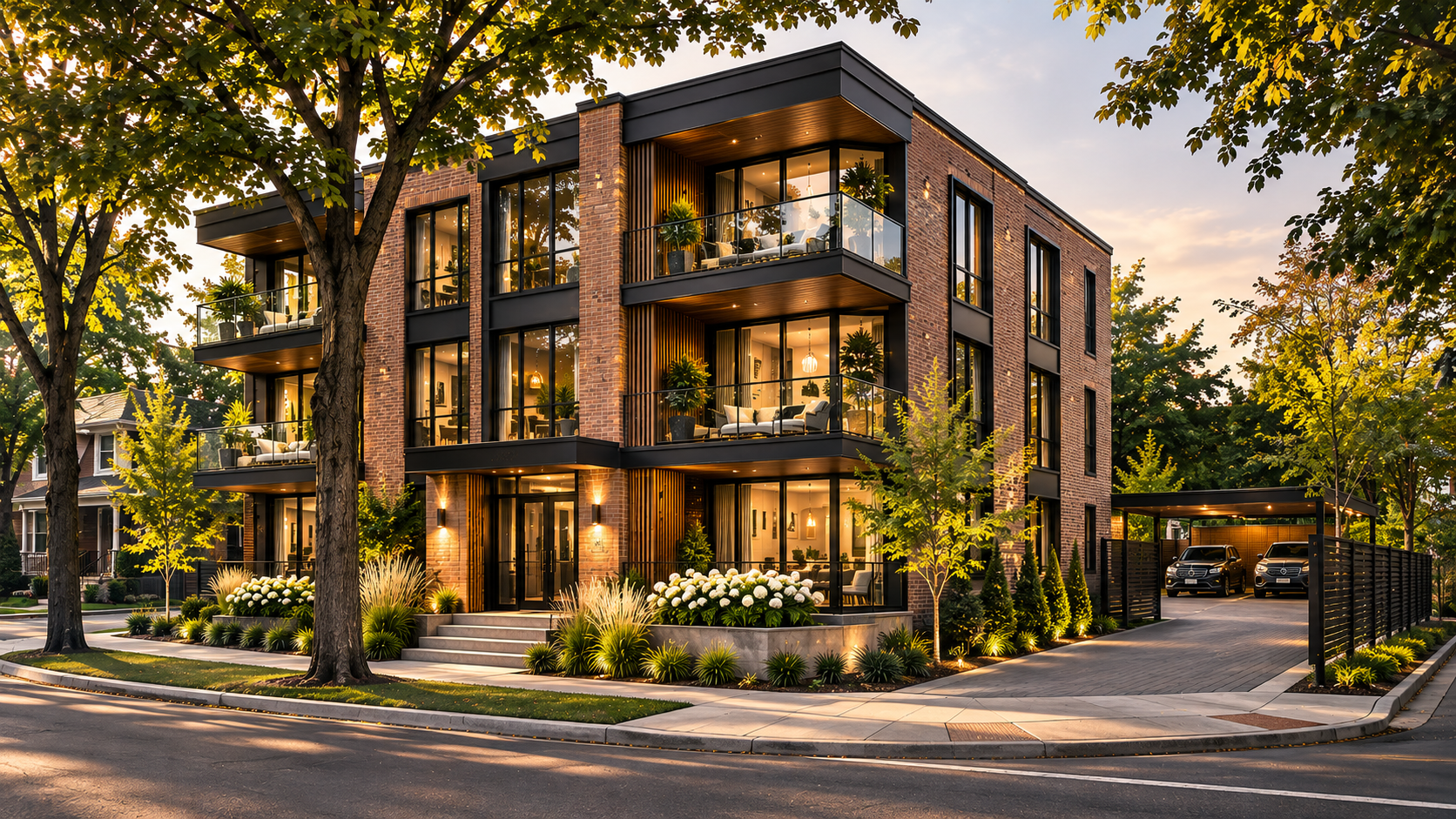
A series of municipal reforms is changing how residential land can be used, creating new possibilities for smaller-scale multi-residential development. For investors, this shift introduces an important consideration: the value of a property may extend beyond its current configuration to include the range of future uses it could legally & financially support.
The investment proposition is particularly compelling when a property already produces rental income.
The combination of existing revenue, established urban land & potential future flexibility is becoming an increasingly relevant consideration in Toronto's investment market.
A Fundamental Shift in Toronto's Residential Development Landscape
Toronto's approach to neighbourhood housing has changed considerably in recent years.
Through its Expanding Housing Options in Neighbourhoods initiative, the City has progressively expanded opportunities for multiplex development.
Four-unit multiplexes are now permitted across applicable residential zones citywide, while fiveplexes & sixplexes are permitted on eligible properties within the Toronto & East York District & Ward 23, Scarborough North.
The reforms reflect a broader planning objective: accommodating additional housing within established communities rather than relying exclusively on large-scale developments or outward urban expansion.
The Toronto Regional Real Estate Board's overview of multiplex regulations explains how qualifying property owners can develop additional residential units without pursuing a rezoning or minor variance when their proposals comply with applicable requirements.
For investors, this is significant.
A property that previously offered a relatively narrow range of residential uses may now warrant consideration through a broader development framework.
Importantly, these permissions are not universal development approvals. Individual projects must still comply with zoning, building regulations, servicing requirements & other applicable laws.
Nevertheless, the direction of municipal policy is creating new reasons to examine established residential land more closely.
Beyond the Existing Building: How Multiplex Reform Is Reshaping Urban Land Value
In Toronto's evolving residential landscape, the value of a property is increasingly being considered through two distinct lenses: what it offers today & what its underlying land may accommodate tomorrow.
For investors, this distinction is particularly relevant when evaluating established residential properties situated on generously proportioned urban lots. Beyond existing rental income, these properties may offer a degree of future flexibility that warrants closer examination.
Research prepared in January 2026 by Dr. Walter Torous & Richard Xie of the Massachusetts Institute of Technology's Centre for Real Estate for the Toronto Regional Real Estate Board provides an interesting perspective on this evolving relationship.
Examining Toronto freehold transactions between 2018 & 2025, the researchers identified modest relative price increases of approximately 1% to 2% for larger lots following multiplex zoning reforms. The findings suggest that the market has begun recognizing the additional flexibility associated with certain residential parcels.
While the observed price effects were modest, their significance extends beyond the percentages themselves. They provide empirical evidence that changes in development permissions can influence how buyers assess the underlying value of urban land.
For investors evaluating established income-producing properties, this introduces an additional dimension to the investment equation: the potential to combine existing utility with longer-term development optionality.
Not every property will qualify for additional density, nor will every redevelopment opportunity prove financially viable. However, properties offering favourable lot characteristics, desirable locations & the possibility of future residential intensification may warrant particularly thoughtful consideration.
In a market where investment decisions increasingly depend on both present fundamentals & future flexibility, understanding the value of the land beneath an existing building has become more important than ever.
October 2026: Toronto Moves From Policy to Practical Implementation
On October 2, 2026, Toronto announced another important initiative: free, pre-approved architectural designs for fourplex & sixplex buildings.
Developed with LGA Architectural Partners, the designs accommodate different lot configurations & incorporate considerations such as accessibility, sustainability, climate resilience & construction efficiency.
The initiative represents a practical step toward making qualifying multiplex projects easier to plan. Rather than commissioning every aspect of a new building design from the beginning, property owners may be able to use the City's standardized plans as a starting point.
These designs have undergone review for certain building requirements, although site-specific professional design work & building permits remain necessary. The initiative does not expand sixplex permissions to neighbourhoods where they are not otherwise permitted. Still, it reflects an important change in the City's approach to housing supply.
Toronto is increasingly focused not only on permitting more homes, but also on addressing some of the practical barriers to delivering them.
Read the official announcement here: City of Toronto: Pre-Approved Multiplex Designs, October 2, 2026
Municipal Incentives & the Economics of Multiplex Development
Municipal policy changes become particularly significant to investors when they influence the financial feasibility of development.
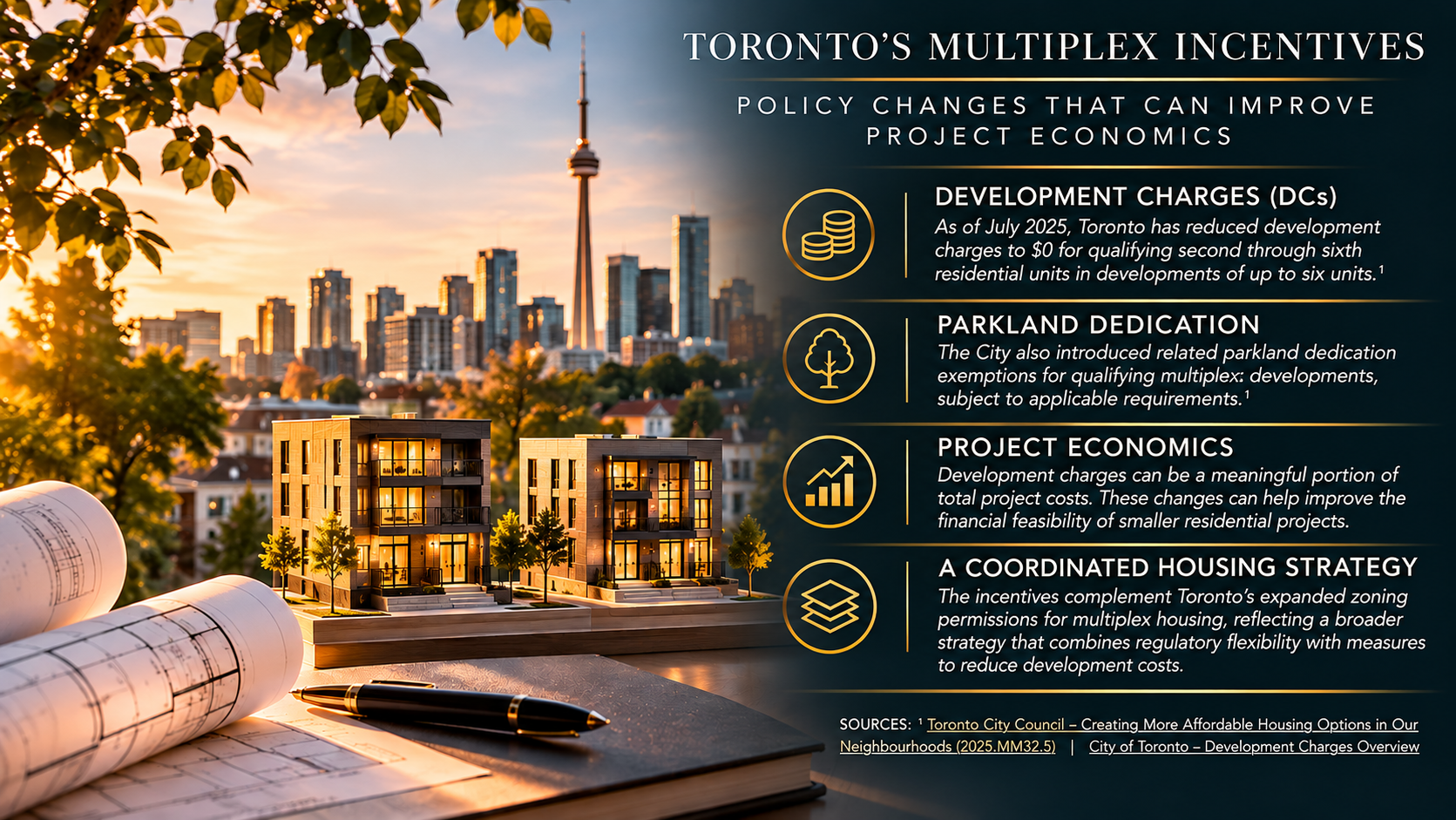
In July 2025, Toronto City Council adopted amendments reducing development charges to zero for qualifying second through sixth residential units in developments containing up to six units on a single parcel of land. Council also approved related exemptions from parkland dedication requirements, subject to the applicable legislation & municipal bylaws.
Development charges help finance the infrastructure required to support growth. Depending on the nature & scale of a project, these charges can represent a meaningful component of development costs. Reducing or eliminating eligible charges may improve the financial feasibility of smaller residential projects, although construction costs, financing, professional services, servicing requirements & other municipal fees remain important considerations.
These measures are particularly noteworthy alongside Toronto's evolving multiplex zoning framework. Together, they reflect a broader municipal strategy that addresses not only where additional housing may be permitted but also some of the financial barriers associated with delivering it.
For investors evaluating Toronto's residential intensification opportunities, understanding the relationship between zoning permissions, development costs & site-specific feasibility is increasingly important. Development charge exemptions do not establish zoning entitlement or guarantee project approval. Eligibility & applicable fees should be confirmed directly with the City.
Official sources: Toronto City Council: Creating More Affordable Housing Options in Our Neighbourhoods | City of Toronto: Development Charges Overview
Why Existing Multi-Residential Properties Offer a Different Investment Proposition
While development policy is attracting attention, existing rental income remains one of the most tangible characteristics of a multi-residential investment. A property containing multiple established residential units may offer an immediate income stream, subject to current tenancy arrangements & actual operating performance.
Unlike vacant development land, an occupied rental property can provide revenue while an owner evaluates longer-term options. For certain purchasers, a particularly interesting configuration is a three-unit property with two tenanted residences & a third available for personal occupancy.
Where legally available, this arrangement can allow a purchaser to combine home ownership with rental income. The revenue from the occupied units may help offset a portion of the property's carrying costs, while the owner retains the benefits of occupying their own residence.
It is not a guarantee of positive cash flow. Financing, taxes, insurance, maintenance, utilities & other expenses must be assessed carefully. Nevertheless, it offers a distinctive alternative to conventional single-family ownership.
For investors who do not intend to occupy the property, established multi-unit buildings can provide income diversification across separate tenancies. And where the land possesses favourable physical characteristics, the possibility of future improvements or intensification may justify further investigation.
The attraction is not simply the number of units. It is the flexibility to evaluate a property as both a present income-producing asset & a potential long-term investment platform.
The Enduring Appeal of Thoughtful Urban Density
There is an architectural dimension to Toronto's multiplex evolution that deserves attention.
Well-designed multi-residential properties can accommodate additional households within established neighbourhoods while maintaining a more intimate scale than large apartment developments.
They can make use of existing infrastructure, introduce housing diversity & create opportunities for more efficient land utilization. For investors, thoughtful design can also contribute to long-term residential appeal.
Natural light, functional layouts, durable materials, energy efficiency & attractive outdoor spaces can influence tenant satisfaction & the desirability of a property over time.
As the City's residential framework evolves, these characteristics are increasingly worth examining alongside traditional investment metrics.
The strongest opportunities will not necessarily be those offering the greatest theoretical density.
They will be those where architectural quality, financial feasibility & long-term residential demand can be brought into alignment.
Why the Timing Deserves Attention
Toronto's multi-residential market is entering a period in which several important factors are converging. Municipal policies are expanding the range of permitted residential uses in eligible areas. Financial incentives are addressing certain development costs. New architectural resources are helping property owners explore qualifying projects.
And research suggests that redevelopment flexibility is already influencing how some buyers value urban land, albeit modestly.
At the same time, a selective property market creates reason for investors to approach acquisitions with greater attention to income, financing & long-term fundamentals. This is not an argument that every multi-residential property represents a strong investment. It is an argument for examining the sector with greater sophistication.
A well-located triplex may be attractive because of its existing income. A property with a vacant unit may appeal to an owner-occupier seeking to combine residential use with rental revenue. A substantial urban parcel may warrant a closer examination of its development potential, revealing opportunities for meaningful long-term value creation.
The opportunity is ultimately about making informed decisions based on what a property offers today, while understanding how changing municipal policies may influence its future.
The Investment Opportunity Ahead
Toronto's residential development landscape is evolving, but the fundamentals of intelligent real estate investment remain remarkably consistent.

Location matters. Income matters. Land quality matters.
What is changing is the range of possibilities that certain properties may offer.
For discerning investors, the opportunity lies in recognizing where established residential utility, desirable urban locations & favourable land characteristics intersect with evolving municipal policies.
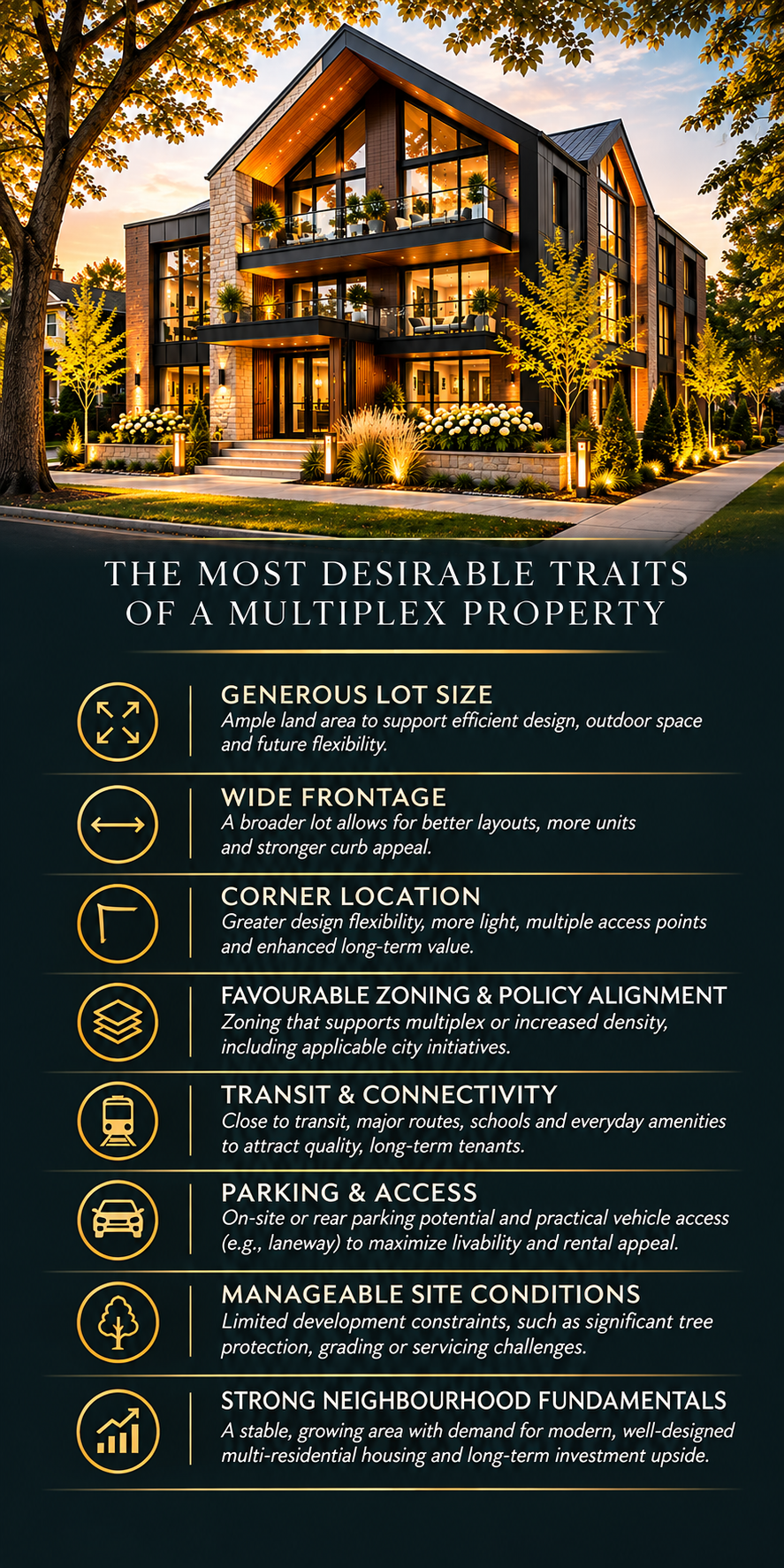
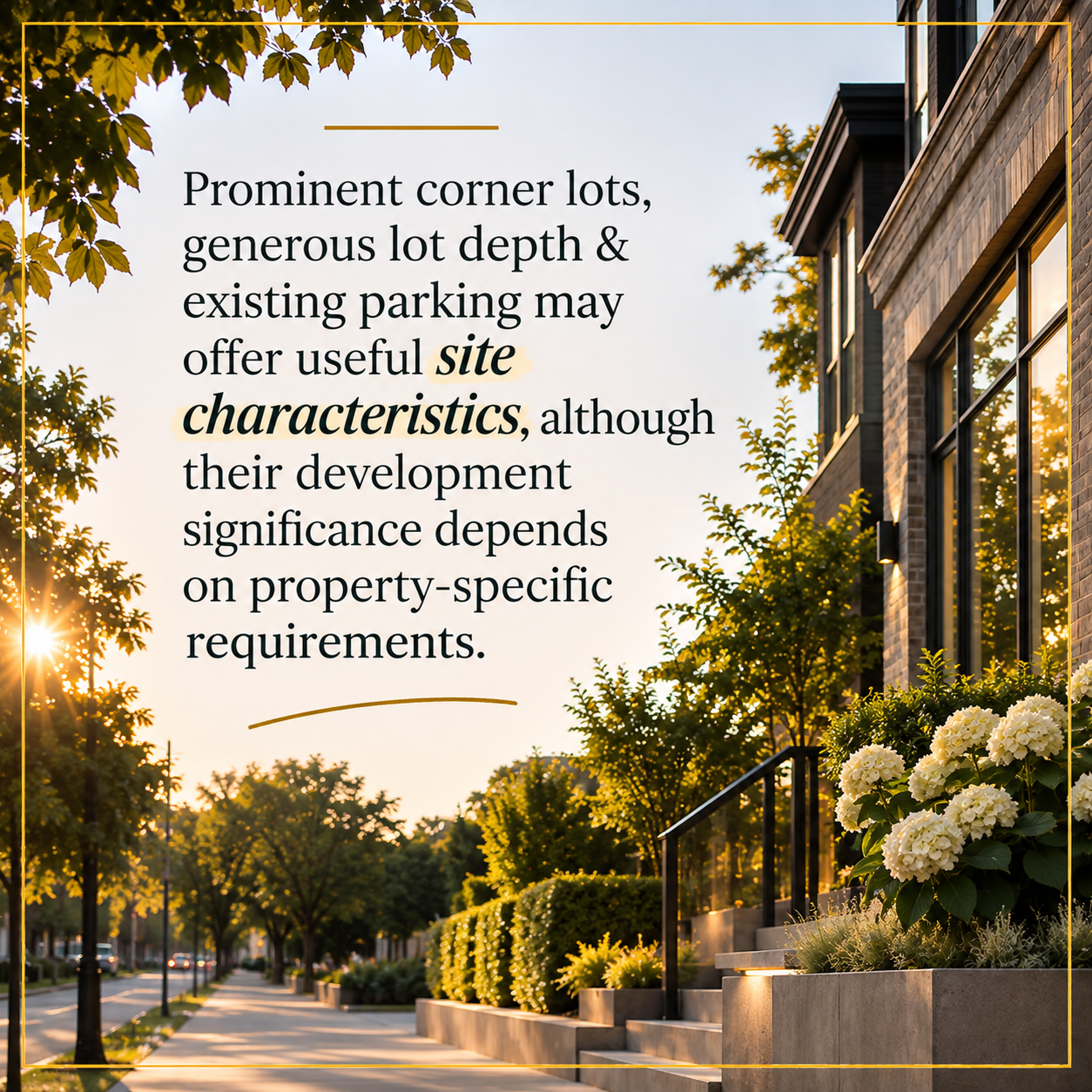
Generous lot dimensions, prominent corner positioning, convenient access & existing rental potential can make certain properties particularly worthy of investigation. Beyond their immediate utility, these characteristics may offer a degree of long-term flexibility that adds another dimension to the investment equation.
While development permissions, legal occupancy & financial feasibility must always be independently verified, the ability to recognize opportunity beyond a property's existing configuration is becoming an increasingly valuable part of informed real estate investment.
As Toronto's housing landscape continues to evolve, the most compelling investments may be those that offer enduring value today while preserving flexibility for tomorrow.
Connect with Rachelle Bernardi, REALTOR®, to discover Toronto properties offering compelling investment fundamentals, desirable locations & potential for long-term value.
This article is intended for general informational purposes only. Municipal policies, development incentives & financing conditions are subject to change. Development potential, legal occupancy, rental income & investment performance must be independently verified. Readers should consult qualified financial, legal, planning, architectural & mortgage professionals before making investment decisions.